EMI or PI Licence: Which One Does Your Business Need?
The key differences between an Electronic Money Institution and a Payment Institution licence in the EU – and how to choose the one that fits your business model, banking needs and growth plans.
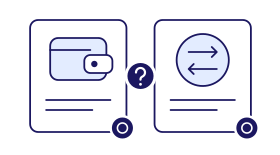
Excerpt: Both licences let you move money for customers. They differ in what you can hold, how much capital you need and how banks and partners will see you. Here is how to choose.
For many fintech businesses, the first real licensing decision comes down to two options: an Electronic Money Institution (EMI) licence or a Payment Institution (PI) licence. Both are EU regimes. Both allow you to provide payment services and, once authorised, to passport those services across the European Economic Area. Both require safeguarding of customer funds.
But they are not interchangeable. Choosing the wrong one can mean paying for capital and compliance you do not need – or discovering, after approval, that your licence does not cover the product you actually want to build.
The core difference: storing value versus moving it
The simplest way to separate the two licences is to ask what happens to customer money between the moment it arrives and the moment it leaves.
A Payment Institution executes payment transactions. Funds received from a customer are held only for as long as needed to carry out the payment – transferring money to a recipient, settling funds to a merchant, executing a remittance. A PI is not meant to hold balances for customers to use later.
An Electronic Money Institution can issue electronic money: a stored monetary value that customers hold and use for future payments. Prepaid cards, digital wallets with balances and multi-currency accounts are typical e-money products. An EMI can also provide the same payment services as a PI.
If your customers need to keep a balance with you – top up now, spend later – you are almost certainly looking at e-money, and therefore an EMI licence.
What each licence allows
A Payment Institution licence typically covers activities such as:
- Merchant acquiring and payment processing
- Money remittance
- Execution of payment transactions, including direct debits and credit transfers
- Issuing payment instruments that do not store value
- Payment initiation and account information services (which can also be authorised or registered on their own)
An EMI licence adds:
- Issuing and redeeming electronic money
- Operating accounts and wallets in which customers hold balances
- Prepaid and e-money card programmes
Neither licence allows you to take deposits in the banking sense, and e-money balances cannot earn interest for the customer. Some PIs may grant limited, short-term credit linked to payment services under strict conditions. EMIs cannot use e-money funds to grant credit.
Capital and ongoing requirements
Initial capital requirements are set at EU level and differ significantly between the two regimes.
- A PI providing only money remittance must hold at least EUR 20,000.
- A PI providing only payment initiation services must hold at least EUR 50,000.
- A PI providing other payment services, such as acquiring or executing payment transactions, must hold at least EUR 125,000.
- An EMI must hold at least EUR 350,000.
Beyond initial capital, both types of institution must maintain ongoing own funds calculated on their business volumes, safeguard customer funds, maintain governance and internal control functions, and meet AML and operational resilience requirements. In practice, an EMI carries a heavier ongoing compliance load, because it manages stored customer balances over longer periods.
Some member states also offer lighter regimes for small PIs and small EMIs with limited volumes. These can be a useful starting point, but they usually do not come with passporting rights – which limits your ability to serve customers across the EEA.
How banks and partners see each licence
This is where the decision becomes commercial rather than legal.
An EMI licence signals that you hold customer balances. Banks providing safeguarding accounts will look closely at your reconciliation, your treasury processes and the risk profile of your customers. In return, an EMI licence gives you control over the full customer relationship: you can issue your own IBANs through a partner bank, run your own card programme and design the product end to end.
A PI licence is often simpler to onboard with banks and acquirers when your model is transactional – you receive funds, you move them, you settle. Partners can assess the flow more easily because money does not stay with you for long.
In both cases, the quality of your application documentation matters beyond the regulator. A clear business plan, a credible risk assessment and a well-described fund flow are exactly what banks will ask for during onboarding. A licence obtained with weak documentation often leads to harder banking conversations afterwards.
Questions to answer before you decide
Do customers need to hold a balance with you? If yes, you likely need an EMI licence.
Will you issue cards? Prepaid and e-money cards point towards an EMI. Other card models may be possible under a PI, depending on the structure.
Is your model purely transactional? Acquiring, remittance and payment execution can usually be covered by a PI licence.
What will your product look like in three years? Starting with a PI and upgrading later is possible, but it means a second authorisation process. If e-money features are on your roadmap, it may be more efficient to apply for an EMI licence from the outset.
What capital can you commit – and maintain? Initial capital is only the beginning. Ongoing own funds grow with your volumes.
Where are your customers? If you plan to serve customers across the EEA, make sure the licence you choose, and the jurisdiction you choose it in, supports passporting.
A note on upcoming reform
The EU has been working on a revision of its payments framework, including a new Payment Services Directive and a Payment Services Regulation. The proposals would bring e-money institutions under the payment institution framework over time. Businesses planning a licence today should build this into their long-term thinking, but the current regimes remain the basis on which applications are assessed.
The bottom line
The right licence is the one that fits your product today and your roadmap tomorrow – and that banks and partners can understand quickly. An EMI licence gives you more control and more responsibility. A PI licence is lighter and faster to operate for transactional models.
If you are unsure which route fits your business, we can review your model, fund flows and growth plans and recommend the licence and jurisdiction that make commercial sense.