Why banks close fintech accounts – and how to prevent it
Why banks close fintech and payments accounts, the warning signs that come first, and the practical steps that keep your banking relationships stable.
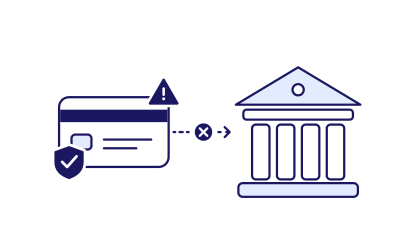
Excerpt: Account closures rarely come out of nowhere. Here is what banks look for, the warning signs that come before an exit, and the steps that keep your banking relationships stable.
For a fintech or payments business, a bank account is not a utility. It is the infrastructure that holds customer funds, settles merchant payouts and pays salaries. When a bank decides to close that account, the business can lose weeks of operations – and sometimes its most important customers – before a replacement is in place.
Most founders experience a closure as sudden. From the bank's side, it almost never is. Closures are usually the end of a process that started months earlier, with questions that were answered late, incompletely or not at all. Understanding that process is the first step to staying on the right side of it.
Why banks are cautious with fintech clients
Banks carry the regulatory responsibility for the money that moves through their accounts. When a fintech holds customer funds, processes payments for merchants or serves customers the bank will never meet, the bank inherits part of that risk. If something goes wrong – fraud, money laundering, sanctions breaches – supervisors will ask the bank why it allowed the activity.
This is why fintech and payments businesses are placed in higher-risk categories by default. It is not a judgement on any single company. It reflects the fact that the bank has limited visibility into the end customers behind the account, and must rely on the fintech's own controls.
The practical consequence is simple: the bank is not only assessing your business. It is assessing whether it can trust your compliance to do part of its job.
The most common reasons for account closures
1. The activity no longer matches what was declared at onboarding. A business opens an account as a software company and later starts collecting funds on behalf of users. Or it adds a new vertical, a new country or a new product without telling the bank. When transaction patterns change and the bank cannot connect them to the business it onboarded, it treats the gap as a risk.
2. Weak or generic AML controls. Banks periodically review their higher-risk clients. If the AML policy looks like a template, the risk assessment does not reflect the actual customer base or monitoring appears to exist only on paper, the bank has no evidence that the fintech can manage its own risk.
3. Unclear fund flows. When customer funds, merchant settlements and the company's own operating money pass through the same account without clear separation or reconciliation, the bank cannot see whose money is whose. This is one of the fastest routes to an exit, particularly for regulated payment and e-money firms.
4. Slow or incomplete responses to information requests. Many closures begin with an ordinary request for information: an updated ownership chart, details of a large transaction, the latest financial statements. A delayed or vague answer tells the bank that the relationship is harder to manage than expected.
5. Exposure to high-risk verticals or jurisdictions. Banks regularly review their risk appetite. If your customers include merchants in iGaming, crypto, adult entertainment or other higher-risk sectors, or if you serve customers in jurisdictions the bank is exiting, your account may be affected by a portfolio decision rather than by anything specific you did.
6. Ownership and structure questions. Complex holding chains, shareholders in unexpected jurisdictions or entities without real substance make it difficult for the bank to confirm who ultimately controls the business. If it cannot confirm that, it cannot keep the account.
The warning signs that come first
Closures are usually preceded by signals. Businesses that recognise them early have time to respond.
- More frequent or more detailed information requests than usual
- Questions about specific customers, merchants or transactions that previously went unnoticed
- Delays in processing payments or additional manual checks on outgoing transfers
- Reduced limits or new restrictions on certain payment types
- A request for a meeting with the compliance or risk team rather than the relationship manager
None of these automatically means an exit is coming. All of them mean the bank is reassessing the relationship. The quality of your response at this point often decides the outcome.
How to keep your banking relationships stable
Declare your business accurately – and keep it updated. The onboarding description should match how the business actually operates, including fund flows, customer types, geographies and expected volumes. When something material changes, inform the bank before it shows up in the transaction data. Proactive disclosure builds trust. Discovered changes destroy it.
Build an AML framework around your real business. A business-wide risk assessment that reflects your actual customers, products and channels is the foundation. Policies, onboarding rules and monitoring should follow from it. When a bank asks how you manage a particular risk, you should be able to point to a documented control and evidence that it works.
Separate and reconcile funds. Customer money, merchant settlements and operating funds should be clearly segregated, with daily reconciliation where your model requires it. For regulated firms, this is also a safeguarding obligation. For everyone, it is one of the clearest signals of operational maturity.
Prepare a standing due diligence pack. Keep an up-to-date set of documents ready: corporate structure chart, ultimate beneficial owner details, licences, AML policy, risk assessment, recent financial statements and a clear description of fund flows. When the bank asks, you respond in days, not weeks.
Treat information requests as a priority. Assign ownership of bank communication to a senior person. Answer completely, with evidence, and within the deadline. If an answer will take time, say so and give a date.
Do not depend on a single bank. Even a well-run business can be affected by a bank's portfolio decision. A second banking or safeguarding relationship – and, for payments firms, more than one acquiring partner – turns a potential crisis into a manageable transition.
What to do if you receive a closure notice
If the decision has already been made, the priority shifts to continuity. Confirm the notice period and any conditions attached to it. Ask whether the decision can be reviewed if specific concerns are addressed – occasionally it can. Start onboarding with alternative providers immediately, using your due diligence pack. Communicate early with customers or merchants who may be affected by changes to payment details.
Then, once operations are stable, look honestly at why it happened. If the cause was internal – a gap in controls, an undeclared change in activity, an unclear structure – fixing it now protects the next relationship.
The bottom line
Banks do not close accounts because a business is in fintech. They close accounts when they cannot understand or trust how a business manages its risk. The businesses that keep their banking relationships stable are the ones that make that trust easy: accurate declarations, a real AML framework, clean fund flows and fast, complete answers.
If your bank has started asking more questions than usual, or you want to prepare before it does, we can help you review your set-up through a bank's eyes and strengthen what needs attention.